
Most entrepreneurs start out wearing every hat in the business. You're the marketer, the customer service rep, the delivery person, the bookkeeper, and the CEO all before lunch. In the beginning, that hustle feels necessary. And honestly, it is. But here's what nobody tells you: the habits that help you survive in year one will silently hold you back in year three.
The real turning point in any growing business isn't a new client, a bigger office, or a viral moment. It's the moment you stop being the product and start building the system. This article breaks down exactly why that shift matters, how to know when you're ready, and practical steps you can take to start building processes that actually work, without burning out along the way.
Why "Doing It All" Is a Trap
There's a reason so many small business owners feel exhausted and stuck at the same time. They're busy every single day, but the business isn't really growing. It's just surviving.
When you do everything yourself, your business becomes entirely dependent on you. That means:
If you take a day off, things fall apart
You can't take on more clients without drowning
You can't train someone else because "it's all in your head"
Every decision runs through you, which creates constant bottlenecks

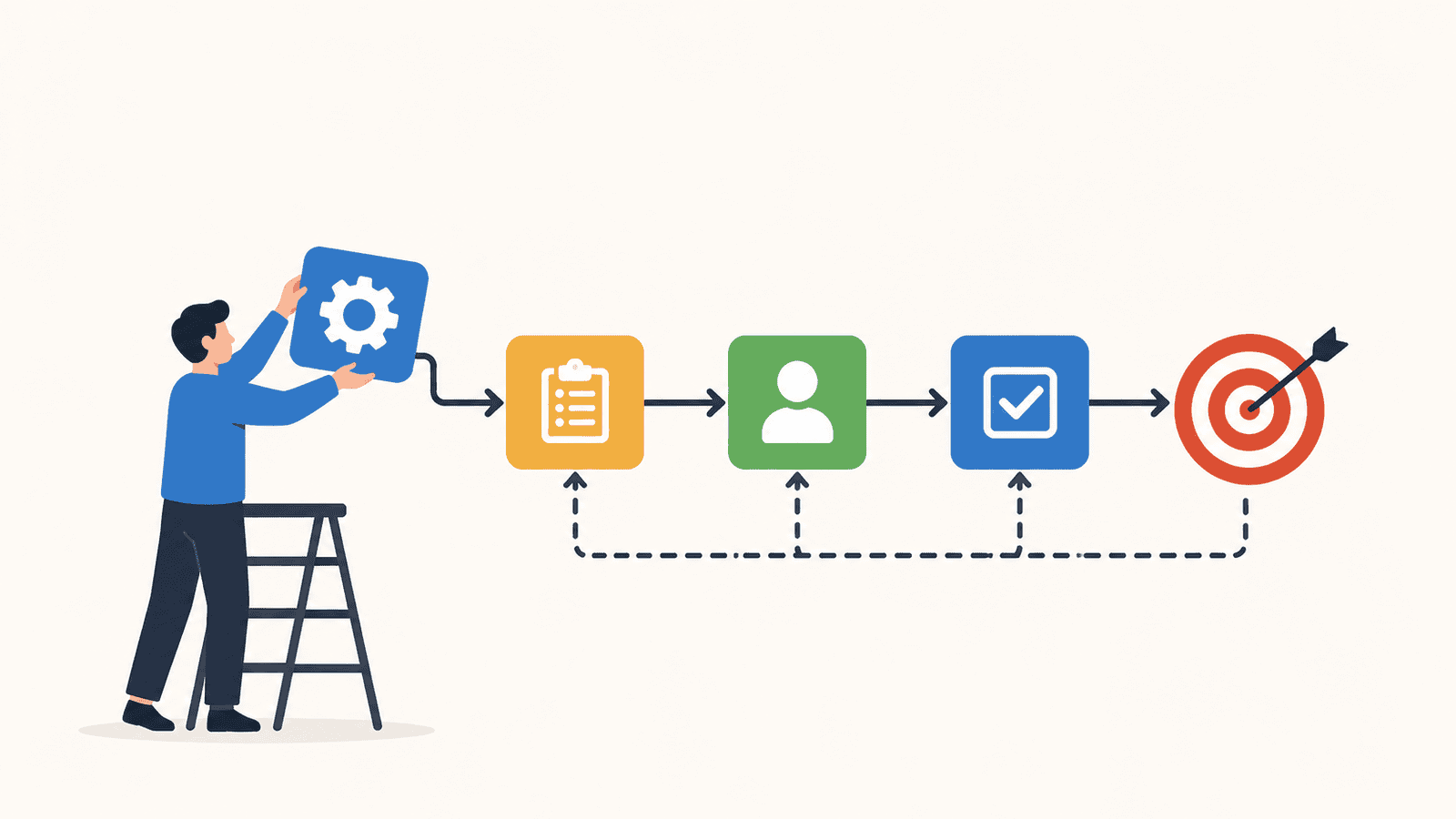
What "Building Processes" Actually Means
When people hear the word processes, they often picture massive corporate manuals or complicated flowcharts. But that's not what this is about.
A process is simply a documented way of doing something consistently.
It could be as simple as:
A checklist for onboarding a new client
A template for responding to customer inquiries
A weekly routine for reviewing your finances
A step-by-step guide for fulfilling an order
Signs You're Ready to Make the Shift
Not every business is ready to systemize from day one, and that's okay. But there are some clear signals that it's time to stop improvising and start documenting.
You're the Bottleneck
If every decision, email, or task runs through you before it can move forward, you're the bottleneck. This is the most common sign that your business needs systems, not more hours from you.
You're Repeating Yourself Constantly
Are you explaining the same things over and over to team members, contractors, or clients? That's a process waiting to be written down. Repetition is the universe's way of telling you to document something.
Growth Feels Scary Instead of Exciting
When a new client or opportunity shows up and your first thought is "how am I going to handle that?" rather than "great, let's go", that anxiety is telling you something important. A business built on systems can absorb growth. One built on hustle often breaks under it.
You Can't Take Time Off Without Chaos
If your business falls apart the moment you step away, it doesn't truly belong to you, you belong to it. That's a major quality-of-life issue, and it's also a serious business risk.
How to Start Building Processes (Without Overwhelming Yourself)
The shift doesn't have to happen overnight. Here's a practical, beginner-friendly approach that works for businesses at any stage.
Step 1: Identify Your Most Repeated Tasks
Start by listing everything you do in a week. Highlight the tasks that happen regularly, daily, weekly, or with every new client or order. These are your highest-priority candidates for systemization.
Focus on frequency and impact. A task you do three times a day is a better starting point than something you do once a year.
Step 2: Document As You Go
One of the easiest ways to build processes is to record yourself doing the work. Whether it's a screen recording, a voice memo, or just written notes, capture the steps while they're fresh, not in theory, but in real time.
Don't aim for perfection. A rough checklist that exists is infinitely more useful than a perfect guide that lives only in your head.
Step 3: Test the Process With Someone Else
Once you've documented a process, hand it to someone unfamiliar with the task. Could they follow it without asking you ten questions? If not, refine it. The best processes are clear enough for someone else to execute without your involvement.
Step 4: Use the Right Tools
You don't need expensive software to build great processes. Many entrepreneurs start with:
Notion or Google Docs for written SOPs (Standard Operating Procedures)
Loom for video walkthroughs
Trello or Asana for workflow management
Zapier for automating repetitive digital tasks
The tool matters less than the habit of actually documenting.
Step 5: Review and Improve Regularly
Processes aren't permanent. As your business evolves, your systems should too. Schedule a monthly or quarterly review to check whether your documented processes still reflect how things actually work, and update them when they don't.
Common Mistakes to Avoid
Building business systems sounds straightforward, but there are a few pitfalls that trip up even experienced entrepreneurs.
Trying to systemize everything at once. This leads to overwhelm and usually nothing gets done. Pick one area, client onboarding, for example, and do that well before moving on.
Keeping processes only in your head. If it's not written, recorded, or saved somewhere accessible, it doesn't count as a process. It's just a habit, and habits don't scale.
Never delegating after documenting. A system you never use is just busywork. The point of documentation is to eventually get the work off your plate.
Building processes for show, not function. Long, overly detailed SOPs that no one reads are worse than useless, they give the illusion of organization without the benefit. Keep it simple, clear, and actionable.
The Long-Term Payoff
Here's what happens when you commit to building real processes in your business:
Your team (even if it's just one freelancer) can execute without constant hand-holding
You can onboard new people faster because the knowledge isn't locked in your head
Your business becomes more valuable, to clients, partners, and even future buyers
You get your time back, and with it, the ability to focus on actual growth
Final Thoughts
The shift from doing everything yourself to building processes is one of the most important transformations any entrepreneur can make. It's not glamorous work. It doesn't go viral. But it quietly determines whether your business becomes something that works for you, or something that you work for, indefinitely.
Start small. Document one process this week. Then another next week. Over time, those systems compound into something powerful: a business that doesn't need you to be everywhere at once.Ready to Build a Business That Runs on Systems?
If you're at the stage where you're ready to scale but not sure where to start, consider bringing in outside expertise, a business consultant, operations strategist, or mentor who has helped other entrepreneurs make this transition. The right guidance can save you months of trial and error and help you build systems that actually fit your business model.
Take the first step: audit your week, identify your most repeated tasks, and document just one. That one process is the beginning of a business that works smarter, not just harder.