
This is a lengthy read, not meant for skimming, but designed to serve as a complete resource for navigating Side Hustle vs Real Business: What’s the Difference? Apologies in advance for being long-winded.
What Is a Side Hustle?
A side hustle is typically an activity you do alongside your main job or responsibilities to earn extra income. It could be freelancing, selling products online, content creation, or offering services on weekends.
At the beginning, it usually feels informal and low-risk. There’s often no structured system, no clear financial tracking, and minimal planning involved.
But here’s the key shift most people miss:
The moment you start earning money, you may already have reporting and compliance responsibilities depending on your country.
Even small or inconsistent income can fall under self-employment rules, which means it needs to be tracked and reported properly.
What Is Considered a Real Business?
A real business is not defined by how much money you make, it’s defined by how you operate and your intent.
If you are consistently trying to generate profit, attract customers, and grow your activity, you are running a business.
This includes situations where you:
Offer products or services regularly
Promote yourself through social media or marketing
Reinvest money back into the activity
Track income and expenses (even at a basic level)
Offer products or services regularly
Promote yourself through social media or marketing
Reinvest money back into the activity
Track income and expenses (even at a basic level)
In simple terms:
If you’re thinking long-term and profit-driven, you’re already operating a business.
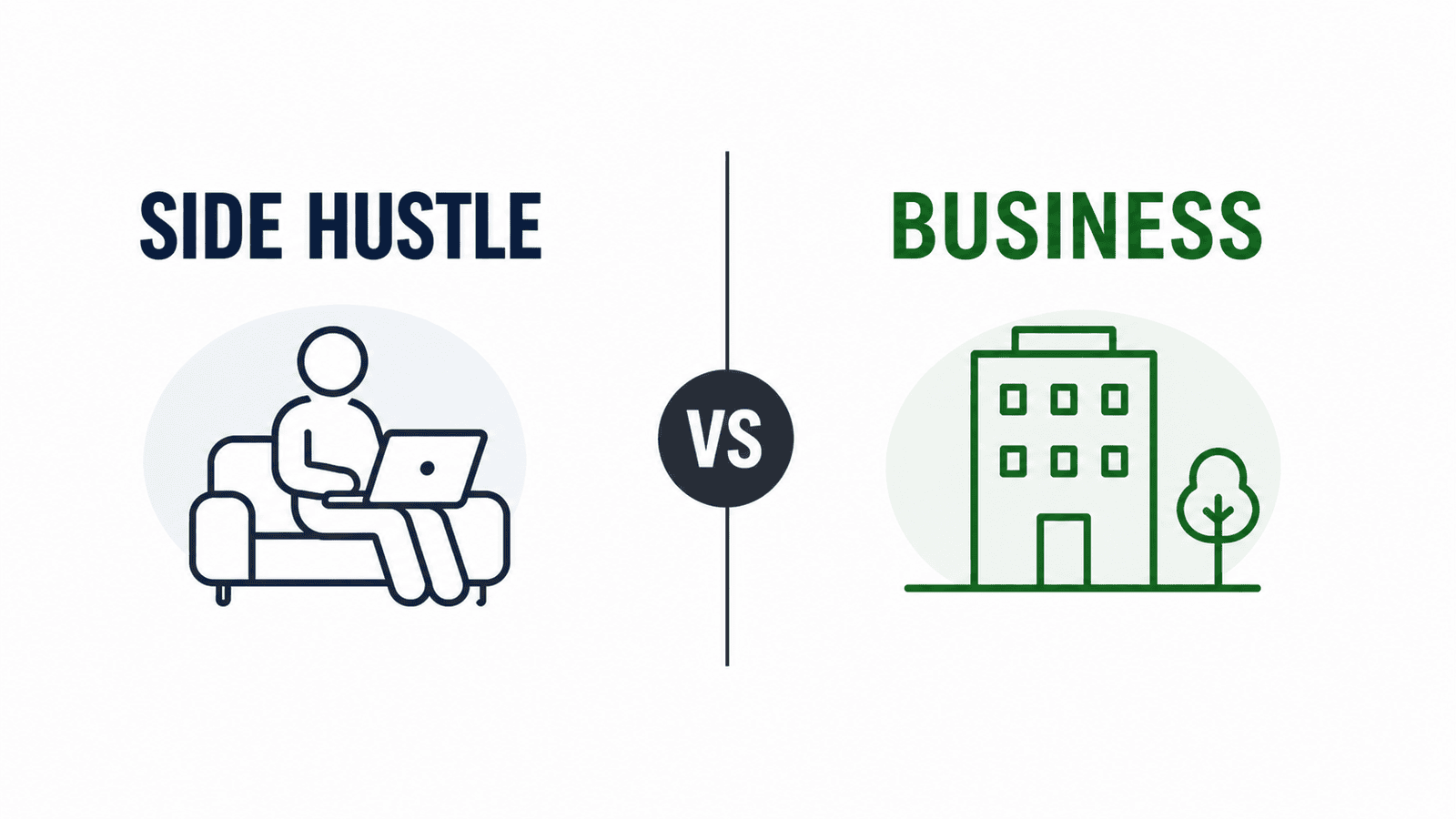
Side Hustle vs Business: The Real Differences
Intent to Make Profit
The biggest difference between a side hustle and a business is intent.
A side hustle might start as something experimental. But once there’s a clear intention to earn consistently and grow, it becomes a business in the eyes of most regulatory systems.
For example, selling unused personal items occasionally is very different from buying inventory with the goal of reselling at a profit.Level of Structure
Most side hustles start without structure. Income might go into a personal account, expenses aren’t tracked properly, and there’s no system in place.
As you grow, this becomes a problem.
A real business introduces structure such as:
Organized bookkeeping
Separation of personal and business finances
Consistent tracking of income and expenses
Financial and Reporting Responsibilities
This is where things start to matter more.
Even at the side hustle stage, many people are required to:
Report income
Track expenses
Follow basic compliance rules
As the activity grows, these responsibilities expand into full business obligations, which may include:
Registering your activity
Collecting and remitting sales taxes (depending on thresholds)
Filing detailed financial reports
When Does a Side Hustle Become a Business?
There’s no universal number that applies globally, but there are clear signals that indicate the shift:
You are earning consistently over time
You rely on the income (even partially)
You actively market or promote your services
You reinvest profits to grow
In many countries, there are also revenue thresholds where additional obligations kick in, such as sales tax registration.
Once you reach this stage:
You’re no longer testing an idea, you’re running a business.Hobby vs Business: Why It Matters
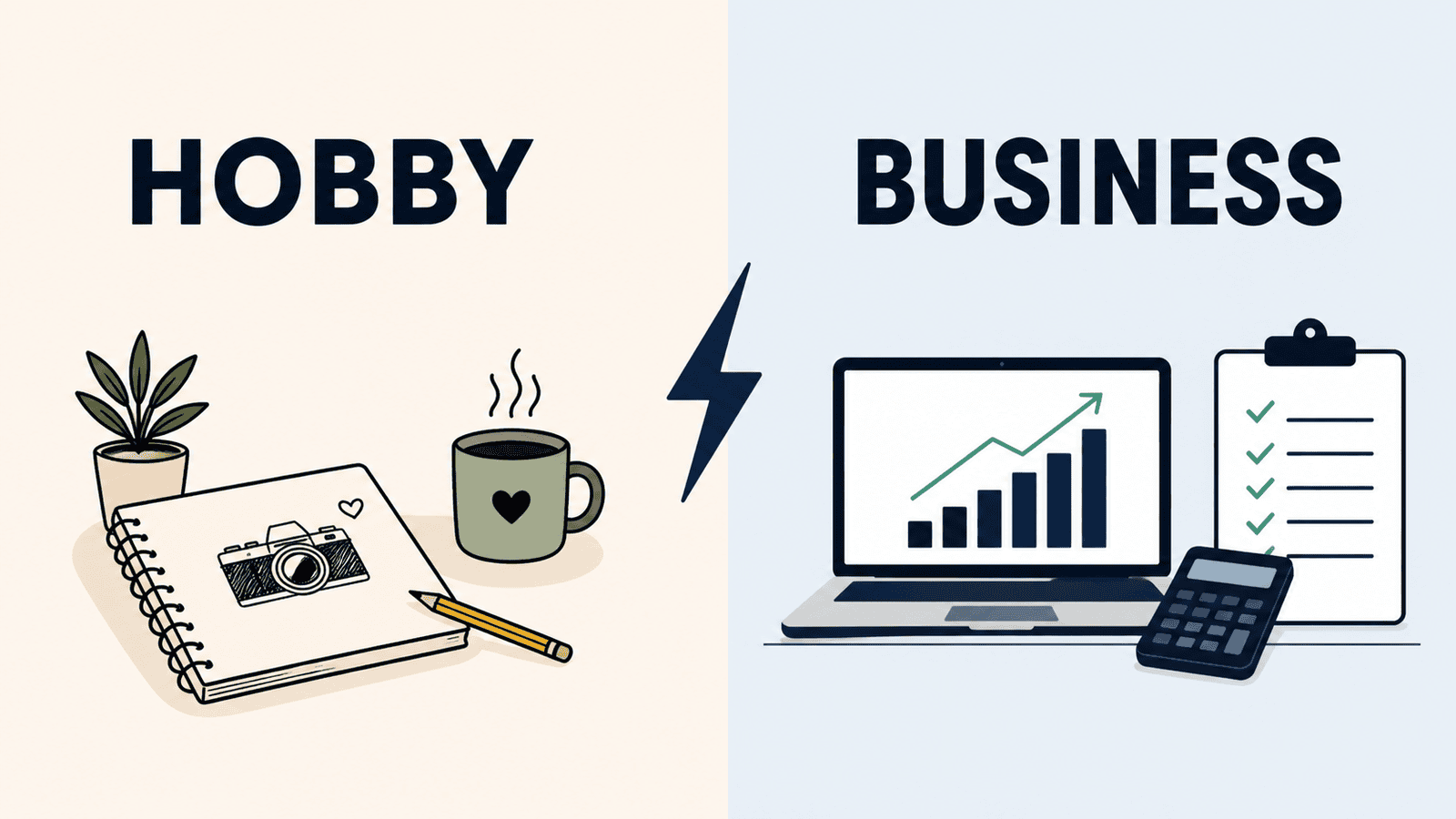
A common misconception is that if something is enjoyable, it can be treated as a hobby.
In reality, most tax authorities distinguish between a hobby and a business based on behavior, not personal intention.
You’re likely operating a business if you:
Price your work to make a profit
Promote or advertise your services
Show consistency in operations
Intend to grow over time
Should You Formalize or Incorporate?
One of the biggest decisions entrepreneurs face is whether to formalize their business structure.
This may include:
Registering a business name
Creating a legal entity (such as a corporation or company)
Formalization often makes sense when:
Your income is stable and growing
You want legal protection
You plan to scale or bring in partners
You want more control over how income is managed
However, formalizing too early can increase costs and administrative work.
The goal is not to formalize quickly, it’s to formalize at the right time.
Common Mistakes Entrepreneurs Make
Across different countries and industries, the same mistakes show up repeatedly when transitioning from a side hustle to a business.
Many people:
Mix personal and business finances
Ignore bookkeeping until it’s too late
Don’t track expenses properly
Wait too long to seek professional advice

What Financial Responsibilities Should You Expect?
As your activity grows, your responsibilities typically expand.
While rules vary by country, most entrepreneurs will deal with:
Income reporting based on profits
Contributions or social taxes (for self-employed individuals)
Sales or value-added taxes once certain thresholds are met
Planning ahead is critical.
Without it, many people are surprised by how much they owe or how complex things become as they grow.
Why This Difference Matters
The distinction between a side hustle and a real business is not just technical, it directly impacts your growth.
A side hustle mindset focuses on:
Extra income
Short-term gains
Minimal structure
A business mindset focuses on:
Sustainability
Systems and processes
Long-term growth
Final Thoughts
A side hustle is often the starting point for something bigger. But staying in that mindset too long can limit your potential.
If you’re earning consistently, attracting customers, and thinking about growth, you’re already operating a business, whether you’ve formalized it or not.
The sooner you treat it like a business, the sooner you unlock real growth, stability, and financial clarity.