
Every business owner in London, Ontario has one. Maybe it’s a literal drawer, maybe an email folder called “Deal with later.” Inside: unopened CRA letters, a shoebox of receipts, and a quiet dread that grows every spring.
Here’s the twist. The drawer is not the problem. The silence is. Most owners who fall years behind on corporate taxes didn’t set out to dodge anything. Life got loud, the business got busy, and one missed T2 return became three. This guide walks you out of the hole, in order, with no judgment.
Why Filing Late Gets Expensive Fast
Your corporation’s T2 return is due six months after its fiscal year-end. Miss it and the CRA charges a late-filing penalty automatically.
The penalty is 5% of the unpaid tax plus 1% for each full month late, up to 12 months, so it can reach 17%. It gets worse for repeat offenders.
If you file late again within three years, the penalty doubles to 10% plus 2% a month, for up to 20 months. Interest, meanwhile, compounds daily on whatever you owe.
The cruel math: every year of silence makes the next year’s penalty bigger.

Three Ways Your Story Can Go
Ending 1: The CRA Finds You First
You get a demand to file, then possible arbitrary assessments, frozen refunds, or collection action. Bank accounts can be targeted. This ending costs the most and gives you the least control.
Ending 2: You Keep Hiding
Nothing happens for a while, which is the trap. Your corporate status can also be at risk, because corporations must keep up their Ontario filings too. Your credibility with lenders, buyers, and partners erodes quietly.
Ending 3: You Walk In Voluntarily
This is the one you want. And it just got better.

The Plot Twist: The Voluntary Disclosures Program
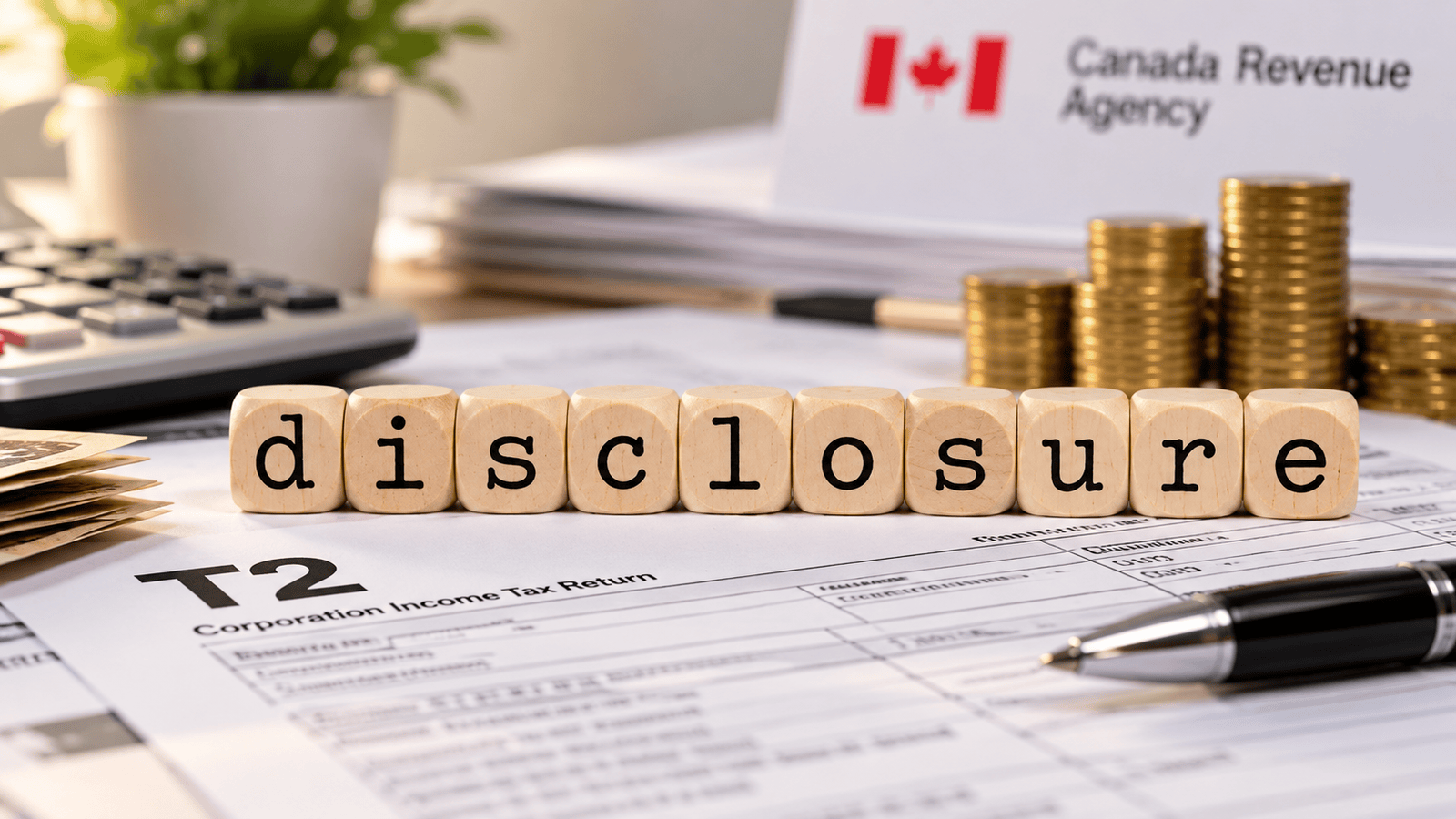
In October 2025, the CRA overhauled its Voluntary Disclosures Program (VDP). An unprompted application can earn 100% relief from penalties and 75% relief from interest. That relief covers the 10 most recent taxation years.“Unprompted” generally means the CRA hasn’t already contacted you about the issue. Even if it has, you may still qualify under the new prompted stream, with partial relief. So timing matters enormously: the sooner you act, the better your odds.
You apply using Form RC199 and must include supporting documents.
Warning: you’ll still owe the actual tax. The VDP wipes out penalties and trims interest. It doesn’t erase the bill.
Your 7-Step Rescue Mission
- Don’t panic, and don’t ignore the mail. Open every letter. Put them in date order.
- Find your fiscal year-ends. Check your incorporation documents. Every missing year needs its own T2.
- Gather your records. Bank statements, sales invoices, expense receipts, loan documents, payroll records. Missing pieces can often be rebuilt from bank and credit card statements.
- Check your other filings. Corporate tax is rarely the only gap. Look at GST/HST returns, payroll remittances, and T4s. Late filing penalties apply there too.
- Rebuild the books. Catch-up bookkeeping comes before financial statements, and statements come before the return.
- Decide on a VDP application. A professional can tell you whether your situation counts as unprompted, and which years to include.
- File, pay, and set up a system so this never happens again.

A Relatable Scenario
Picture a Forest City contractor who incorporated in 2018. Year one, his cousin’s friend “handled it.” Year two, he assumed that friend still was. By year five, three returns were missing and two CRA letters were sitting in the truck’s glove box.
He assumed the answer was bankruptcy. It wasn’t. After rebuilding his books from bank statements and filing a disclosure, his real problem turned out to be a tax bill he could manage, not the disaster he’d been imagining for years.
Fear almost always inflates the problem. The real number is usually smaller than the one in your head.
Common Mistakes That Make It Worse
- Filing the newest year only and hoping the older ones disappear. They don’t.
- Guessing the numbers. Estimates invite reassessment. Use real records.
- Waiting for the CRA to call. Once they contact you, your options narrow.
- Mixing personal and corporate spending in the rebuild. Separate them cleanly.
- Hiring “cheap” help who ignores the penalty-relief angle entirely.

Best Practices for Staying Out of the Hole
- Book a yearly accountant check-in, even for a quiet year.
- Keep a monthly bookkeeping routine. Thirty minutes beats thirty hours.
- Use cloud accounting software so records can’t vanish in a drawer.
- Put your T2 deadline in three calendars.
- Send CRA mail straight to your accountant if you receive any.
The Bottom Line
Years of unfiled taxes feel like a mountain, but most owners find it’s a staircase. Each step is small: gather, rebuild, disclose, file. The only truly bad move is standing at the bottom hoping the mountain leaves.
Ready to Open the Drawer?
If you’re a small business owner in London, Ontario, or anywhere in Canada, you don’t have to climb alone. A conversation with an experienced CPA or small business accountant can clarify which years are missing, what you likely owe, and whether a disclosure makes sense. Start with a simple question: “Where do I actually stand?” Then get the guidance to move forward, stay compliant, and build a business system that doesn’t live in a drawer.